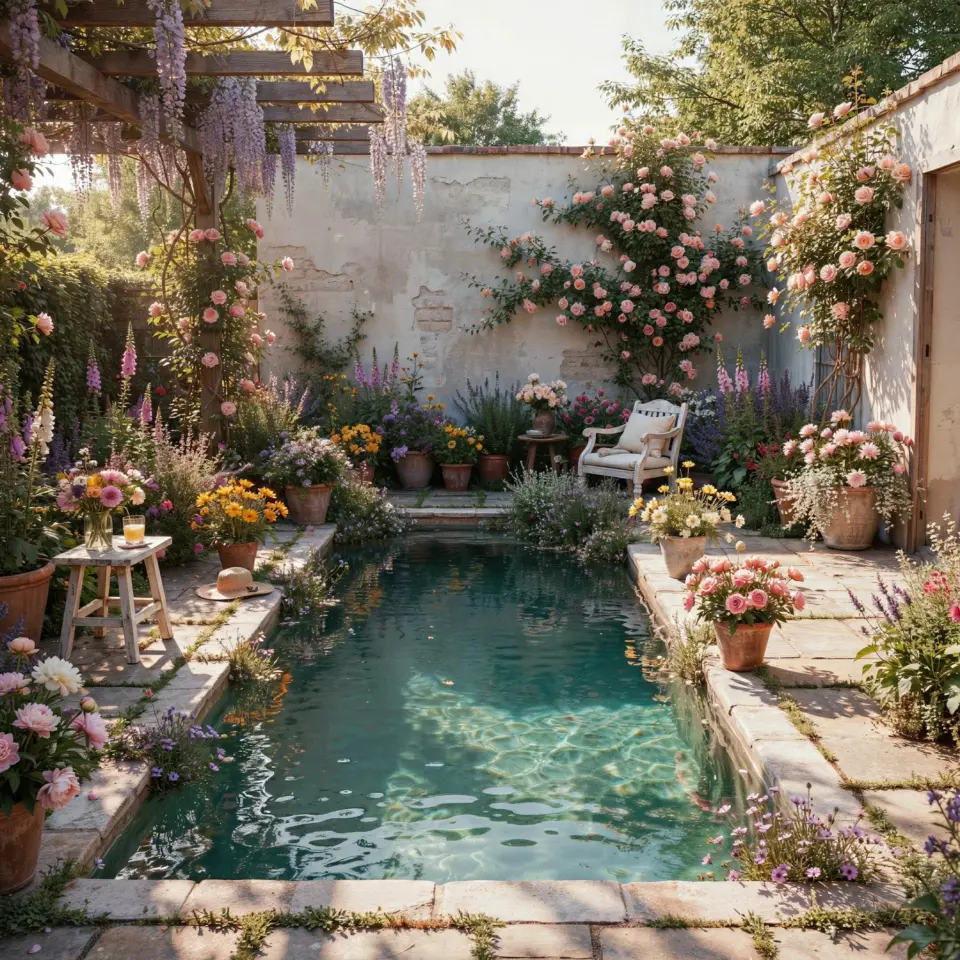
What to Know Before You Start Planning Your Pool Area
I remember staring at my own bare backyard thinking, “I want a pool, but I have no clue where to begin.” If that sounds familiar, you are not alone. Backyard pool ideas can feel overwhelming when you are starting from scratch. The good news is you do not need to be a landscape designer or have a huge budget to create a space that feels like a resort. You just need a clear direction and a few key elements. I learned this the hard way after three failed Pinterest boards and one very patient contractor.
Most people jump straight to the shape of the pool. Do not do that. First, think about how you actually want to use the water. Do you want to swim laps, lounge with friends, or let kids splash around? That decision will affect everything from depth to surrounding materials. Also consider your local climate and sun exposure. A pool that sits in full shade all afternoon will feel cold, no matter how warm the water is. Start with a simple sketch of your yard. Mark where the sun hits at different times of day. That one step saved me from planting a row of palm trees that would have blocked every ray of afternoon light.
Once you have a rough layout, you can start collecting specific backyardpoolideas that match your site. The goal is not just to copy something beautiful but to adapt it to your actual space. A 10 by 20 foot rectangle can feel just as luxurious as a giant freeform shape if you add the right details. This article will walk you through four specific elements that transform a plain pool into a personal retreat: natural stone coping, a cascading water feature, ambient LED lighting, and tropical plants for privacy. Each one is beginner friendly and easy to research further.
Natural Stone Coping: The Edge That Ties Everything Together
Coping is the material that caps the edge of your pool. It might sound like a small detail, but it is the first thing you touch when you get out of the water and the last thing you see when you sit by the edge. I chose natural stone coping for my own pool, and it made a bigger difference than I expected. It feels cool under bare feet on a hot day and does not fade or crack as quickly as concrete or tile.
For a modern look, stick to limestone, travertine, or bluestone. These stones have a matte finish that blends well with water features and plants. Avoid highly polished stone near the pool because it gets slippery when wet. You want a surface with some texture. Travertine is my personal favorite because it stays cool even in direct sunlight, which is great for Arizona afternoons. It also comes in neutral tones like ivory, silver, and walnut that match almost any backyard color scheme.
When planning natural stone coping for your pool, think about how the edge will interact with your water feature. If you have a cascading waterfall that spills into the pool, the coping stones near that area can be larger and slightly raised to create a built-in seating spot. I did this on one side of my pool, and it turned into the most popular spot for people to sit and dangle their feet in the water. It is a small design choice that adds function without extra cost.
- Choose textured stone to prevent slips. Travertine and bluestone are good options.
- Match the coping color to the stone on your water feature or patio for a cohesive look.
- Consider having a wider coping edge on one side to use as a bench or decorative ledge.
- Install coping after the pool shell is finished but before you add the water feature or lighting.
Cascading Water Features That Add Sound and Movement
Still water is fine, but moving water changes everything. A cascading water feature does not have to be a massive rock waterfall. It can be a simple sheet of water that spills from a raised wall into the pool. The sound alone makes the backyard feel like a natural spring, and it helps block out noise from neighbors or traffic. I installed a thin weir (a flat overflow edge) on the shallow end of my pool, and the soft trickle is my favorite part of the whole design.
If you are on a budget, consider a preformed spillway that attaches to an existing pool wall. These cost a fraction of custom rockwork and are much easier to maintain. The pump size matters here. You want enough flow to create a smooth sheet without splashing everywhere. A good rule of thumb is 15 to 20 gallons per minute per linear foot of spillway. Too little flow looks like a leaky faucet. Too much turns into a splash zone that soaks everyone sitting nearby
#backyardpoolideas #poolinspiration #outdoorliving #poollandscaping #backyardoasis
Leave a Comment