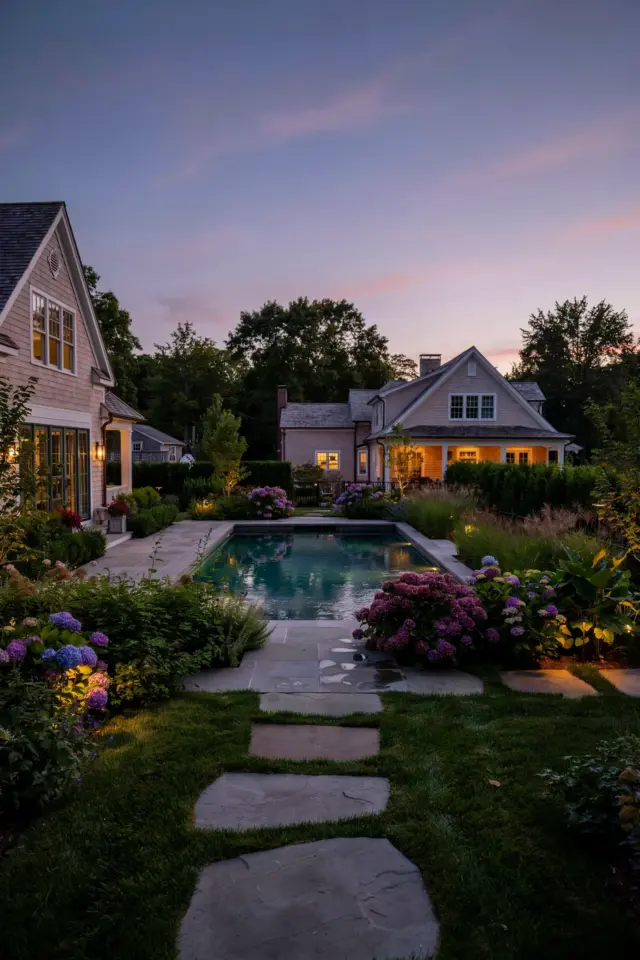
After spending way too many weekends staring at Pinterest boards and sketching layouts for my own backyard, I realized the path to the pool matters more than most people think. It’s not just a way to get from the patio to the water. The right garden paths and walkways can turn a plain pool area into a space that feels intentional, inviting, and actually makes you want to walk barefoot across the lawn. I’ve been scouting dozens of designs, and these 21 ideas cover everything from natural stone to sleek pavers, each one adding character without overwhelming the space. If you’re mapping out your backyard, save this one for later inspiration.
Natural Stone Paths That Blend With Greenery
There’s something timeless about stepping stones that look like they’ve been there for decades. Irregular flagstone slabs with moss creeping between the cracks feel organic and quiet. They work especially well if your pool area is surrounded by plants or trees, because the stone doesn’t fight with the landscape.
For a more structured look, try rectangular bluestone cut into uniform pieces. It keeps the natural texture but feels cleaner underfoot. Leave a gap of about two inches between each stone and fill it with creeping thyme or small sedum. That living filler softens the edges and adds a subtle scent when you walk by.
One tip: stay away from polished or shiny stone near the pool. Wet feet plus slippery surfaces is a bad combination. Honed or cleft finishes give you grip without sacrificing style.
Sleek Modern Pavers for a Minimalist Vibe
If your pool has clean lines and a geometric shape, match it with pavers that do the same. Large format concrete pavers in charcoal or warm gray create a seamless transition from deck to water. They’re also easier to clean than natural stone, which matters when sunscreen and pool chemicals are part of your daily routine.
Try laying them in a staggered running bond pattern instead of a straight grid. The offset lines trick the eye and make the walkway feel longer, which is great for narrow spaces. Another option: use permeable pavers that let rainwater drain through. They cut down on puddles and help with erosion around the pool edge.
For a bolder move, mix two paver sizes, say 12×24 and 6×24, in a random pattern. It keeps the modern feel but adds visual texture without cluttering the design.
Stepping Stone Layouts That Guide the Eye
Stepping stones are the easiest way to create a path that feels like a discovery. Instead of a straight line, set them in a gentle curve that winds around plant beds or a fire pit. The space between each stone should match your natural stride, about four to six inches for adults.
Mixing materials works well here. Use round concrete stepping stones alongside square bluestone chips, or alternate between large slate tiles and smaller river rocks. The contrast keeps the path interesting without being chaotic.
One mistake I see often is placing stones too close together. Give people room to step naturally, and never make them look down and calculate their next move. A comfortable rhythm makes the walk to the pool feel effortless.
- Flagstone rounds with gravel gaps
- Reclaimed brick set in sand (aged look)
- Log slices treated for outdoor use (rustic charm)
- Concrete circles tinted to match the pool coping
Gravel and Pebble Walkways for Casual Comfort
Gravel paths have a reputation for being messy, but if you install them right, they’re actually one of the most forgiving materials. Use crushed stone that locks together, not round pea gravel that shifts underfoot. A stabilizer grid underneath keeps everything in place and prevents that annoying drift into the pool.
The crunch sound under shoes is oddly satisfying, and it gives you an audio cue that someone is coming or going. For a softer look, mix in a few larger pebbles or flagstone steppers to break up the monotony. Just be aware that gravel gets hot in direct sun, so keep it shaded or use lighter colored stones.
Border the path with steel edging or low concrete curbs to keep the gravel contained. And don’t forget to add a small transition strip where the gravel meets the pool deck, otherwise stones will hitch a ride into the water with wet feet.
Wood and Composite Decking Paths That Warm the Space
Wood brings a warmth that stone and concrete can’t quite match. Ipe or cedar planks laid perpendicular to the pool create a boardwalk feel that’s especially nice if your yard slopes or has uneven ground. The raised platform also keeps your feet off hot pavement on summer afternoons.
Composite decking is the practical sibling here. It doesn’t splinter, doesn’t need sealing, and you can find colors that mimic weathered wood or driftwood gray. Use hidden fasteners for a clean surface that won’t snag bare toes.
For a twist, run the planks diagonally instead of straight. Angled lines add visual movement and make a narrow walkway feel wider. Just make sure the wood or composite has good slip resistance, especially if the path gets splashed regularly.
Creative Material Mixes for Personality
You don’t have to pick just one material. Some of the best pool paths combine two or three textures in a way that feels curated, not random. Try a base of large concrete pavers with a ribbon of Mexican beach pebbles running down the center. The contrast between smooth river rock and structured slab is eye catching.
Another idea: use brick pavers in a herringbone pattern for the main path, then border it with a single row of square bluestone tiles. The repetition of shapes ties the whole yard together without being boring. Or mix reclaimed terracotta tiles with modern black slate for a Mediterranean feel that pairs well with olive trees and bougainvillea.
When mixing, stick to a consistent color palette. Pick two main neutrals and one accent, and repeat those across the path and the pool coping. That’s how you get character without visual chaos.
Edging and Lighting Details That Finish the Look
A path is only as good as its edges. Clean edging keeps gravel and mulch in place and defines the shape of the walkway. Use low metal strips, aluminum coping, or even inverted sod bricks for a softer boundary. The edge should be flush with the path surface so you don’t trip or stub a toe.
Lighting turns a daytime path into an evening destination. Solar stakes along both sides give a soft glow without wiring. Or install small LED puck lights recessed into the edge of each stepping stone. That upward light catches the stone texture and creates pools of light that guide you without blinding you.
Don’t overlook the transition from path to pool deck. A single row of contrasting tiles or a narrow strip of artificial grass can soften the shift and keep the design cohesive. These tiny details are what make visitors ask, “Who did your landscaping?”
Choosing the right garden paths and walkways for your pool area doesn’t have to be overwhelming. Start with one material that speaks to you, then layer in texture, edge detail, and lighting as you go. The best paths are the ones that make you want to walk them barefoot, even before you jump in. What material are you leaning toward for your own backyard? Drop a comment below or send me your favorite combos.
#gardenpaths #walkwayideas #poollandscaping #backyarddesign #pathways
Leave a Comment