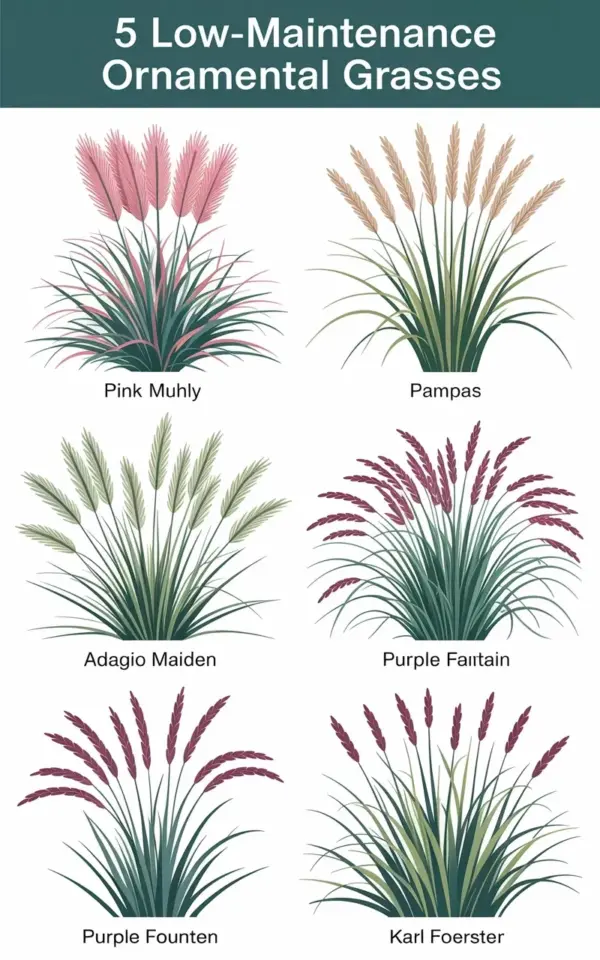
If you have been scrolling through Pinterest for hours, you have seen them. Those effortless gardens that look like they belong in a magazine but somehow require no work. I am here to tell you that the secret is usually ornamental grasses. And not just any kind. The low-maintenance ornamental grasses I am about to share are the real deal. I put together this little guide after years of trial and error (and a few wilting disasters). The botanical illustration I used for reference shows five varieties arranged in a neat grid, with teal text at the top reading “5 low-maintenance ornamental grasses”. Each grass is labeled and distinct. Pink Muhly has that pink-tinged feathery plume. Pampas looks like light beige wispy plumes with green stems. Adagio Maiden is a soft light green. Purple Fountain is deep purple-pink. And Karl Foerster stands tall with dark green plumes. These are the ones I trust. They thrive with almost no care. Plant them, water occasionally, and enjoy. Perfect for beginners or anyone who just wants a pretty yard without the constant fuss.
Pink Muhly Grass: The Cloud That Doesn’t Drift Away
Let me start with a plant that makes people stop and stare. Pink Muhly grass is not your average grass. It sends up these feathery, pink-tinged plumes in late summer that look exactly like a cotton candy cloud. I mean, exactly. The entire clump turns into a hazy pink mound. It’s spectacular. And the best part? It asks for almost nothing. Full sun and well-drained soil. That’s it. Not gonna lie, I planted mine near the mailbox and then forgot about it for a solid month during a heatwave. Came back, and it was still thriving. A little dry at the edges, sure, but fine. Just fine. If you want a pop of color without deadheading or fertilizing, this is the one. It stays compact too, around three feet tall and wide. No flopping. No drama.
Pampas Grass: Big Drama, Zero Attitude
Ok so Pampas grass has a reputation. It’s the showoff of the grass world. Those big, fluffy plumes (light beige wisps on tall green stems) are impossible to miss. People use them in dried arrangements, wedding decor, all that. But here’s the thing. Real Pampas grass in your garden is a different beast. It gets huge. I mean, six to ten feet tall and wide. It needs space. Unless you have a tiny urban yard, then maybe skip this one or you’ll end up with a privacy fence you didn’t ask for. But if you have the room, it is ridiculously easy. Plant it in full sun. Water it a few times until it establishes. Then ignore it. Honestly, I’ve seen Pampas grass survive droughts, neglect, and even a lawnmower incident (don’t ask). It will come back. The plumes last through winter too, so you get visual interest year-round. My dog ate a plume once. He was fine. The plume? Not so much. Anyway, this grass is a statement piece. Use it as a focal point or a screen. Just give it elbow room.
Adagio Maiden Grass: The Quiet Workhorse for Texture
Here’s a grass that doesn’t shout but always delivers. Adagio Maiden grass has these soft, light green plumes that arch gracefully. It stays compact too, around four to five feet. Perfect for borders or mass plantings. I have a row of these along my fence line and they create this lovely waving texture whenever the wind blows. It’s like a slow-motion dance. Now, a tangent: this grass can self-seed a little bit. Not aggressively, mind you. But you might find a few volunteers popping up nearby. I actually like that. It means free plants. Just pull the extras if you want a tidy look. Otherwise, let it do its thing. Cut it back to a few inches in late winter or early spring before new growth starts. That’s the only real chore. And it turns a soft tan in winter, which adds warmth to a bare garden. Year-round appeal with almost no water needed once established. Honestly, I think this one is underrated. Everyone goes for the flashy pinks and purples, but Adagio is the backbone of an easy garden.
Purple Fountain Grass: The One That Steals the Show (But Stays Small)
Look, I have a soft spot for this grass. Purple Fountain grass is the showstopper of the group. Those deep purple-pink plumes are so rich they almost look fake. They rise above a mound of dark burgundy foliage. In the botanical illustration I mentioned, it’s the one with the deepest color. It’s stunning. Now here’s the catch. In colder zones (zone 7 and below), this grass is an annual. It doesn’t survive the winter. But I still plant it every year because it’s worth it. It grows fast, blooms from summer until frost, and never gets bigger than three feet. Perfect for containers or the front of a border. I’ve had neighbors stop their cars to ask what it is. No lie. They think I’m some kind of gardening genius. Meanwhile, I just stuck it in a pot with some potting mix and watered it twice a month. That’s it. If you live in a warm climate, it will come back as a perennial. But even as an annual, it delivers months of color with minimal effort. Buy a few starts in spring, pop them in the ground, and forget about them. Easy.
Karl Foerster: The Architect’s Choice for Vertical Structure
This grass is different from the others. It doesn’t have big fluffy plumes or bold colors. Karl Foerster is all about vertical lines. The dark green plumes stand straight up, like exclamation points in the garden. It blooms early, usually in late spring, and the flower stalks stay upright through winter. Honestly, this grass looks good even when it is dead. It’s like the minimalist’s dream plant. I use it in a row along a walkway to create a sense of rhythm. It’s also fantastic for cutting and bringing indoors. The only maintenance? Cut it back to about six inches in late winter before new shoots appear. That’s it. No dividing needed for years. It tolerates clay soil, wet soil, dry soil. It’s almost annoyingly tough. I once had a Karl Foerster clump that got run over by a lawnmower during a landscaping mishap. The next spring it came back fuller than before. I’m not kidding. If you want structure without fuss, this is your grass. It pairs beautifully with the softer forms of Pink Muhly or Adagio. Put them together and you have a landscape that looks designed but requires almost no work.
Planting and Care Tips for These Five Grasses
Now that you have the picks, here is how to make them happy with minimal effort. None of these are divas. They all share the same basic needs. Here is a quick list I follow:
- Sunlight: All five need full sun. At least six hours of direct light. In too much shade, they get floppy and don’t bloom well.
- Soil: Well-drained soil is ideal, but honestly, most of these will tolerate clay or sandy soil once established. Just avoid standing water for long periods.
- Water: Water deeply once a week for the first month after planting. After that, water only during extended droughts. Seriously. Overwatering kills more grasses than neglect.
- Cutting back: In late winter or early spring, cut the entire clump down to a few inches above the ground. Use a sharp pair of hedge shears or a string trimmer. It’s quick and satisfying.
- Dividing: Every three to five years, if the center of the clump starts to die out, dig it up and divide it. But most of these can go longer without division. Pampas especially hates being moved.
That’s pretty much it. Five grasses. One list. No special fertilizers, no spraying, no deadheading. I have been using this exact combination for years and my garden looks full and interesting from spring through winter. And I spend maybe two hours a year on them total. Not bad for a yard that gets compliments all the time.
Why These Five Grasses Make the Cut (And Others Don’t)
There are plenty of ornamental grasses out there. Some are invasive. Some need constant dividing. Some flop over after a rain and look like a wet mop. I have learned the hard way which ones to avoid. The five I picked here are the ones I actually trust. They are well-behaved, non-invasive (in most climates), and they look good even when you ignore them. Pink Muhly stays compact. Pampas stays upright (if given space). Adagio is tidy. Purple Fountain is a burst of color. Karl Foerster is the backbone. Together they cover every landscaping need: texture, height, color, structure, and ease. Plus they look amazing in that botanical grid illustration. If you are planning your next garden, save this guide. It will save you from buying the wrong grass and then regretting it. I’ve done that too many times. Learn from my mistakes.
So there you have it. Five low-maintenance ornamental grasses that actually deliver. They are not magic, but they come close. Plant them this season, give them a little water and a yearly haircut, and your yard will look like you spent hours on it. Meanwhile you can be inside reading a book or, I don’t know, binge-watching something. That’s the point. Easy, beautiful landscaping without the grind. Now go pick your favorites and get started. You won’t regret it.
#ornamentalgrasses #landscapingideas #lowmaintenancegarden #gardentips #easygardening
Leave a Comment